
Explore the carnivals › Emilia-Romagna › Cento
2027 editionCarnevale di Cento
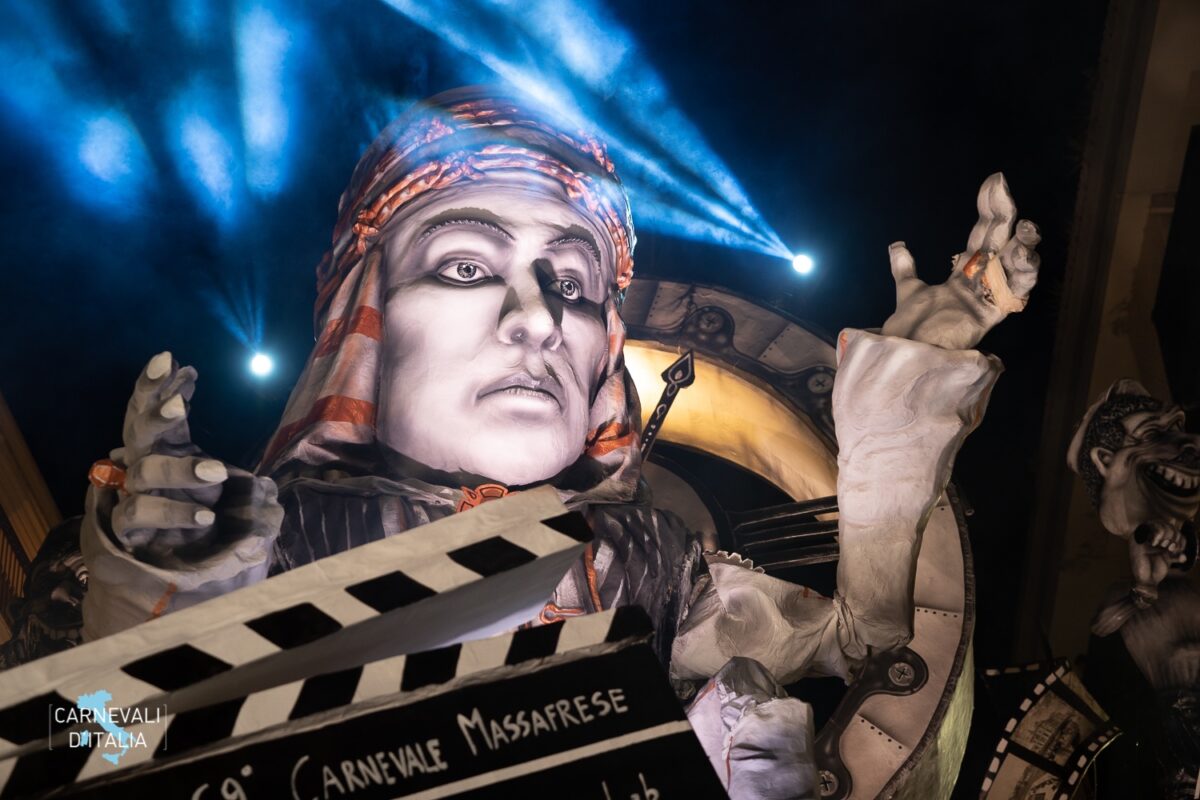
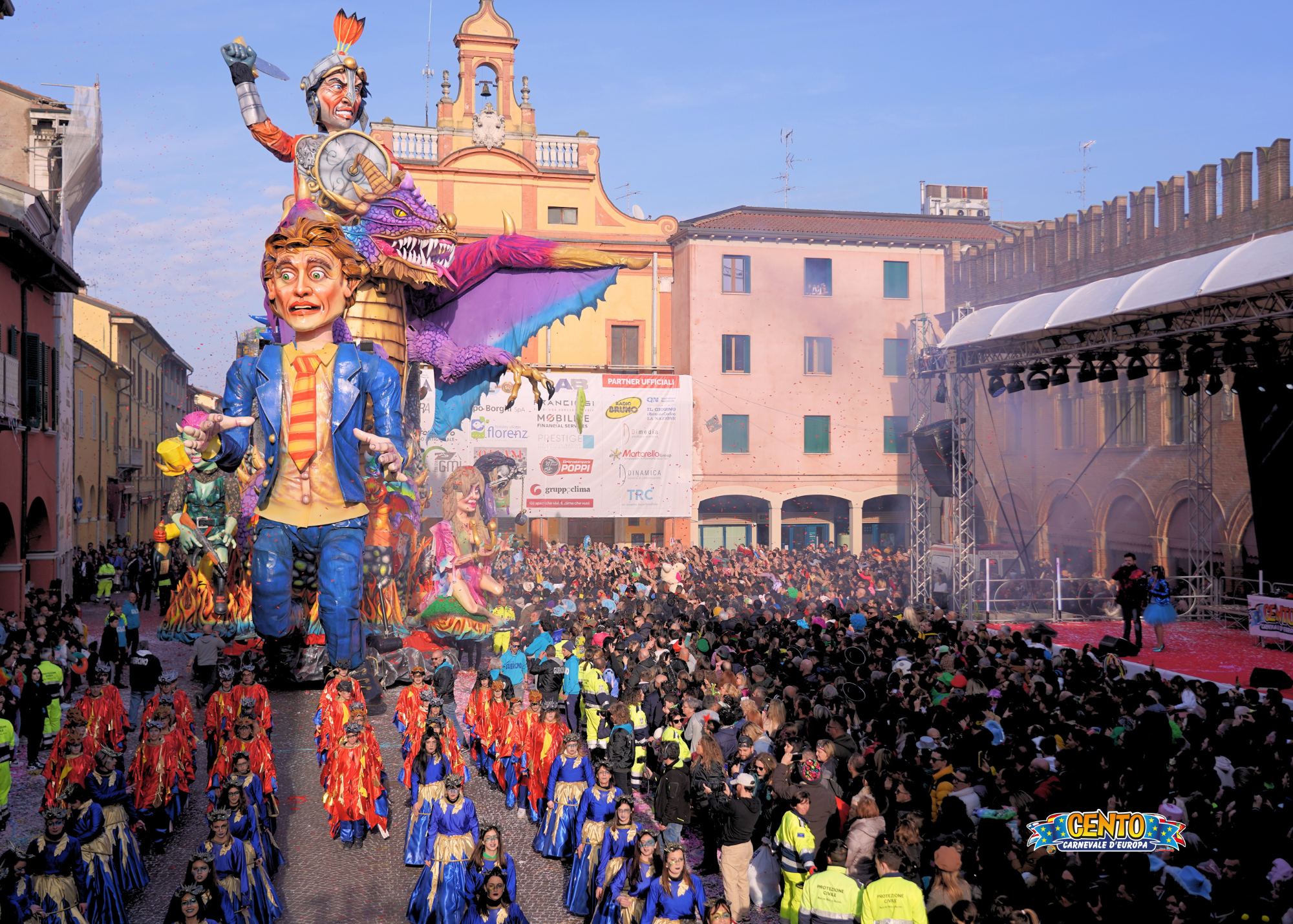
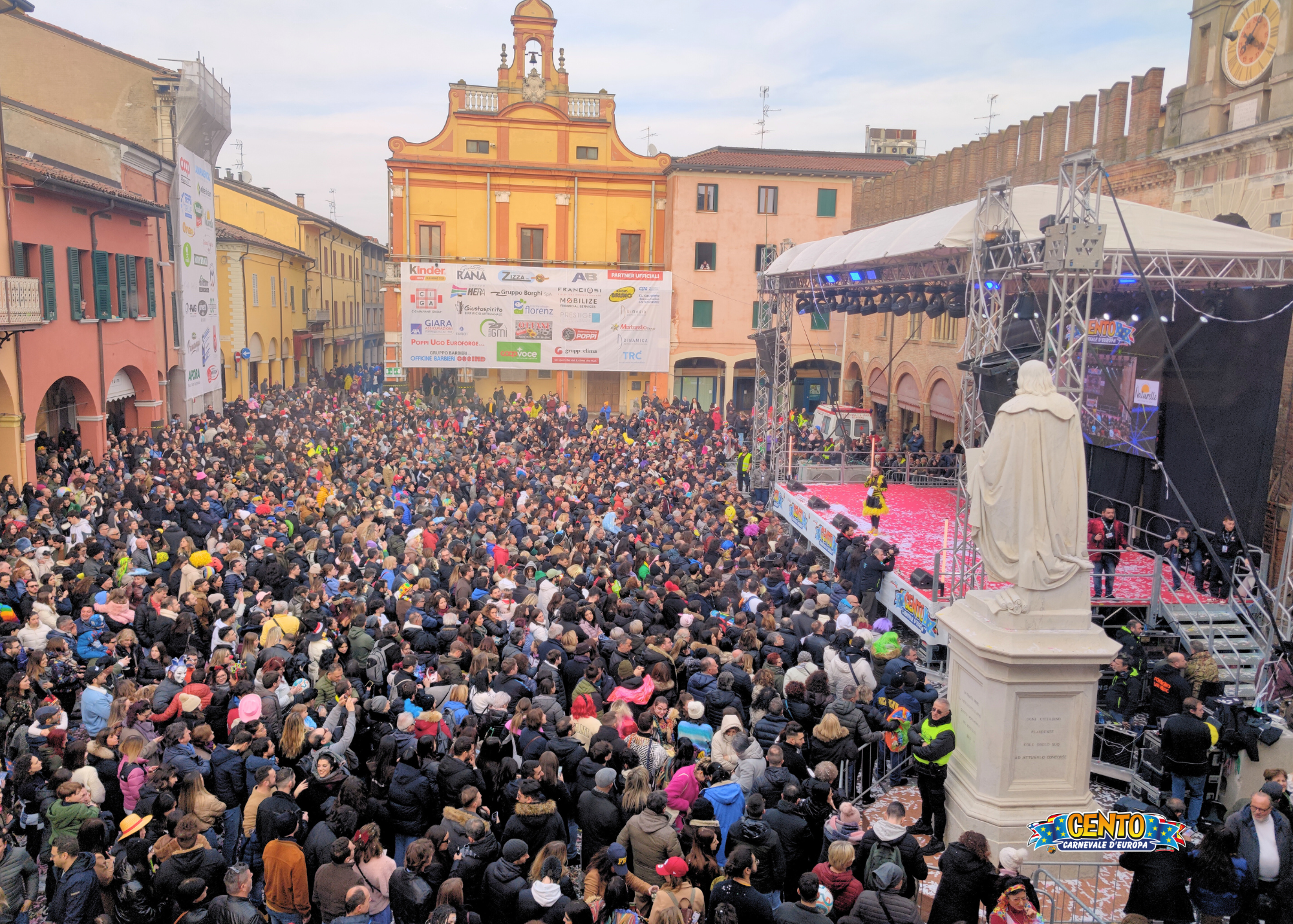
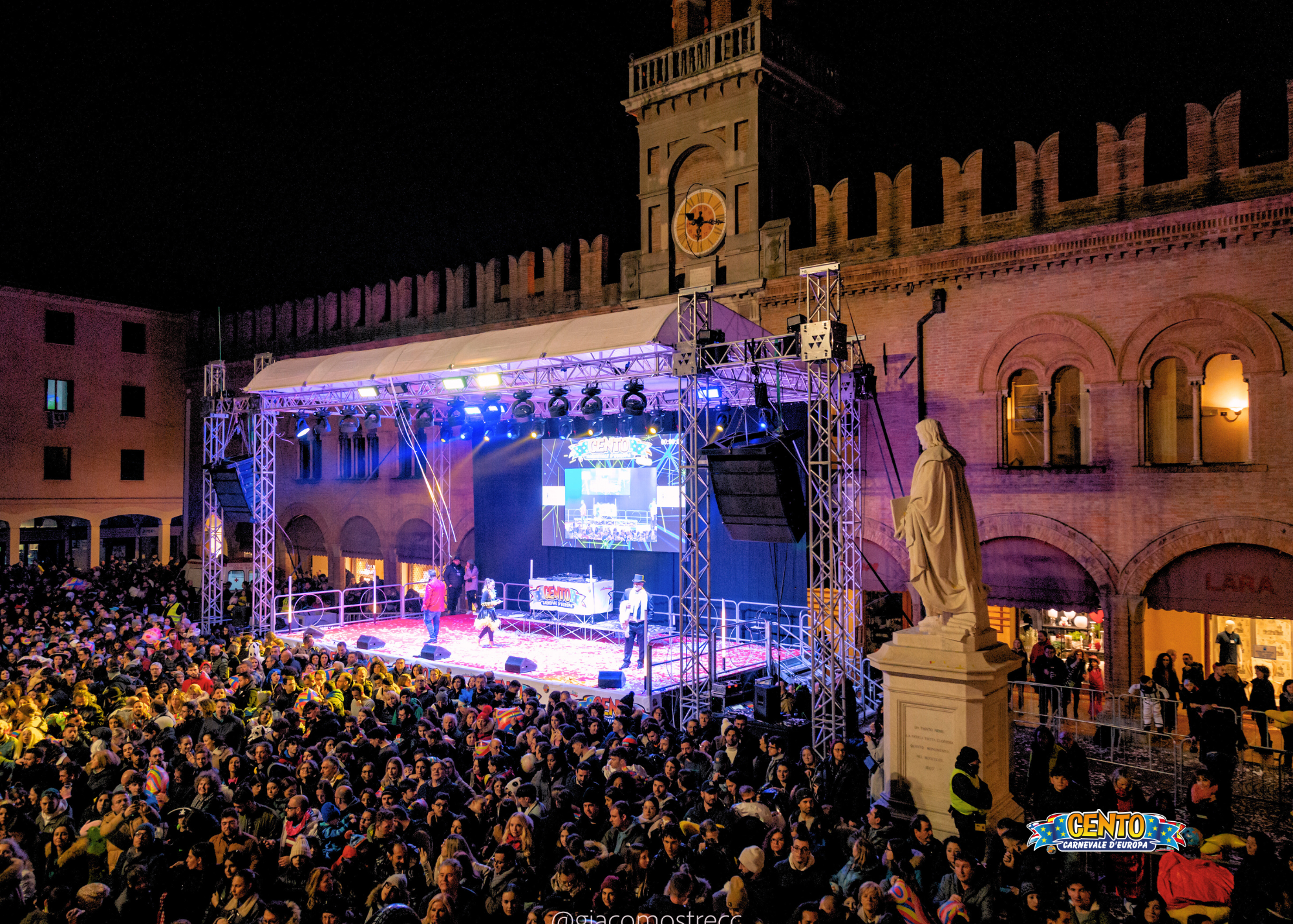
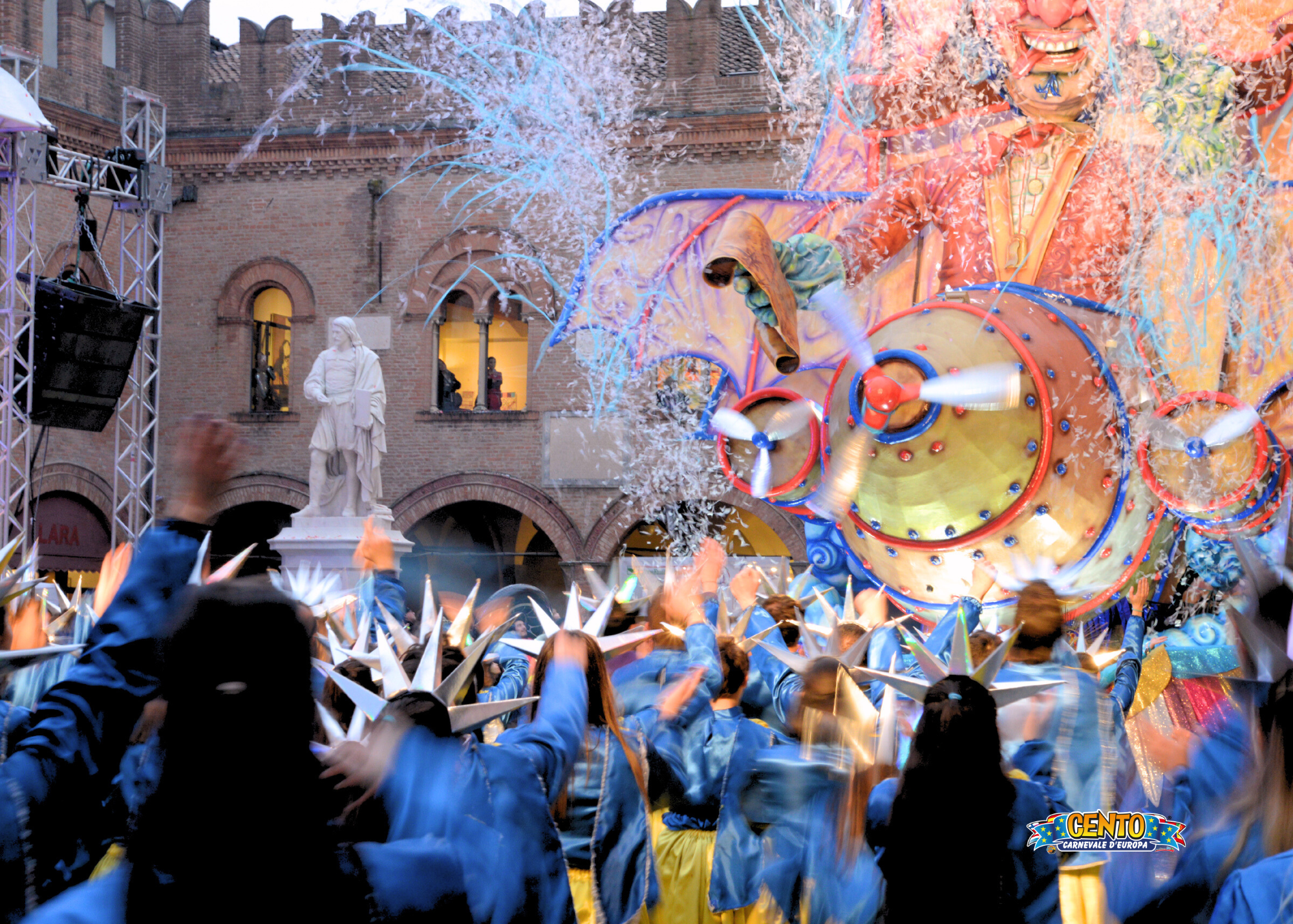
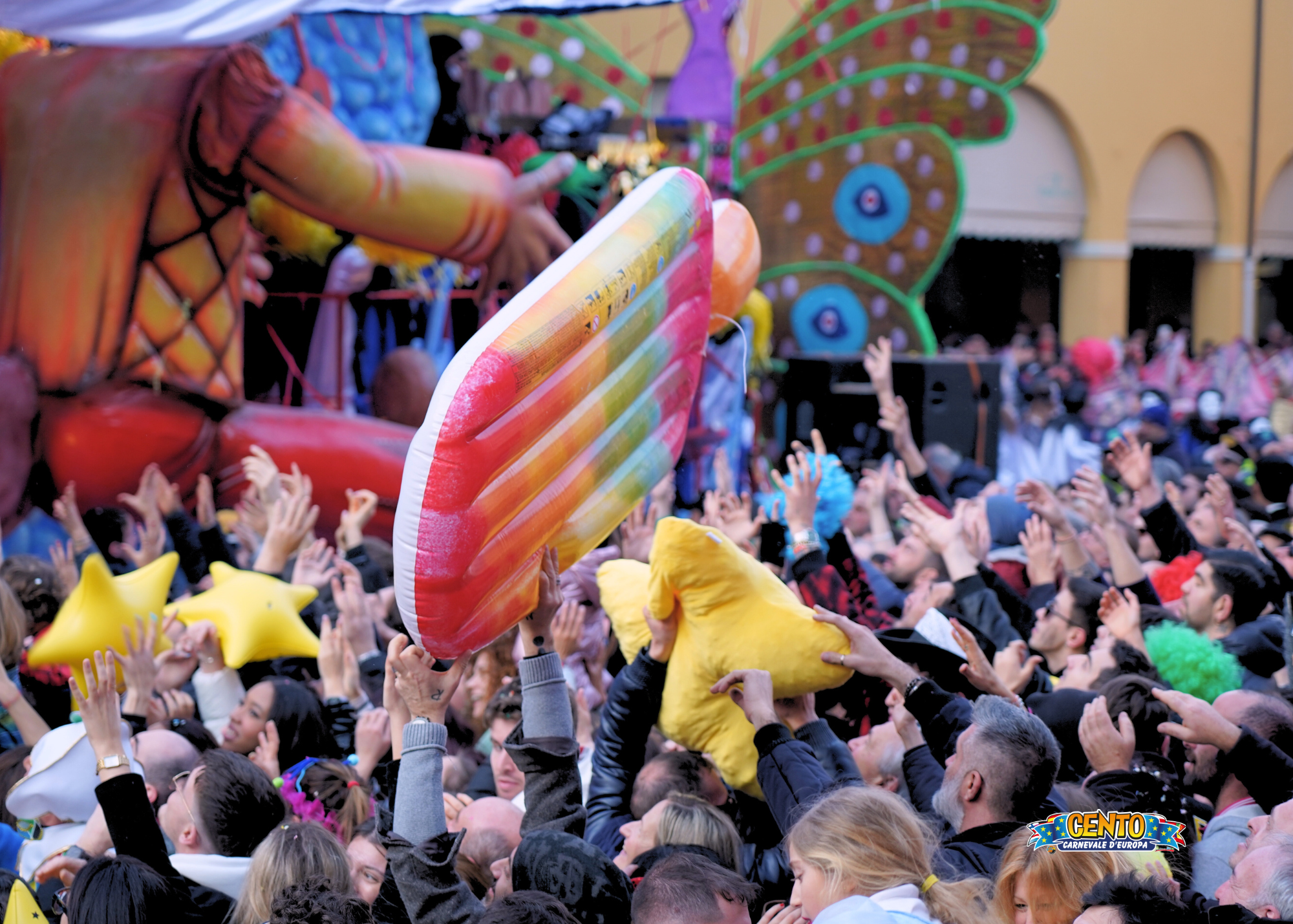
Cento Carnevale d’Europa is one of the best-known carnivals in Emilia-Romagna: huge allegorical papier-mâché floats, the traditional “gettito” of gifts thrown from the float towers and a special twinning with the Rio de Janeiro Carnival, signed in 1993. The heart of the festival is Piazza Guercino.
2027 dates
Tickets
Full ticket for one Sunday: €19 at the ticket desks at the entrances to the route, or online with a booking fee.
- Children under 1.20 m: free entry
- Children from 1.21 m up to 14 years: €15
- Organised groups of at least 25 people: €15, by reservation
Prices published by the organisers for the 2027 edition.
The Carnevale di Cento
“Emilian tradition meets the rhythm of Rio”
Where it is and how to get there
- Where: Cento (FE). The parade runs along corso Guercino from Piazzale Bonzagni to the Rocca, passing through Piazza Guercino.
- By car: A13 Bologna–Padua, exit Altedo; A1, exit Modena Nord; A22, exit Reggiolo-Rolo. Parking is free.
- By train: San Pietro in Casale, San Giovanni in Persiceto, Bologna Centrale and Ferrara stations; a shuttle service can be booked from Bologna Centrale and Ferrara.
- By camper van: free areas in Piazzale Sette Fratelli Govoni (via Marescalca) and in via Burgatti.
- Accessibility: a reserved area for people with reduced mobility and their companion, on request to the organisers and subject to availability.
Official website
The programme, updates and official announcements are published by the organisers.
Gallery
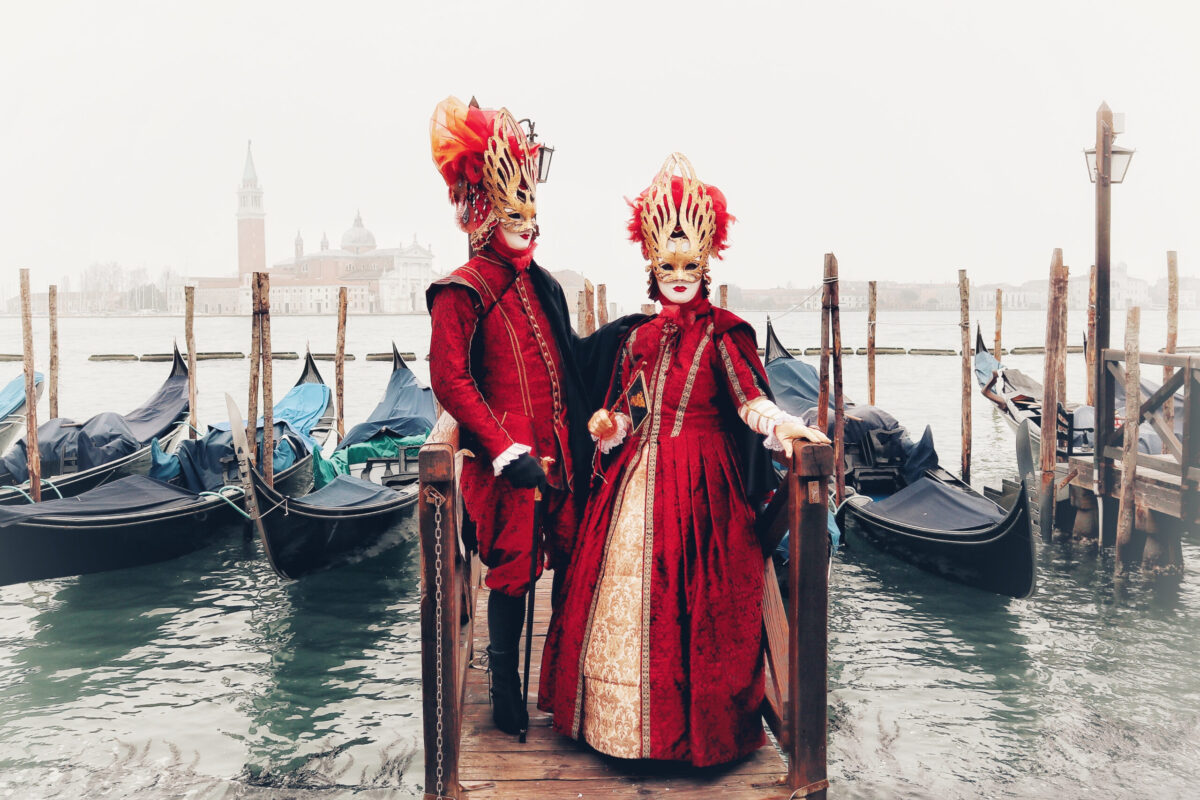
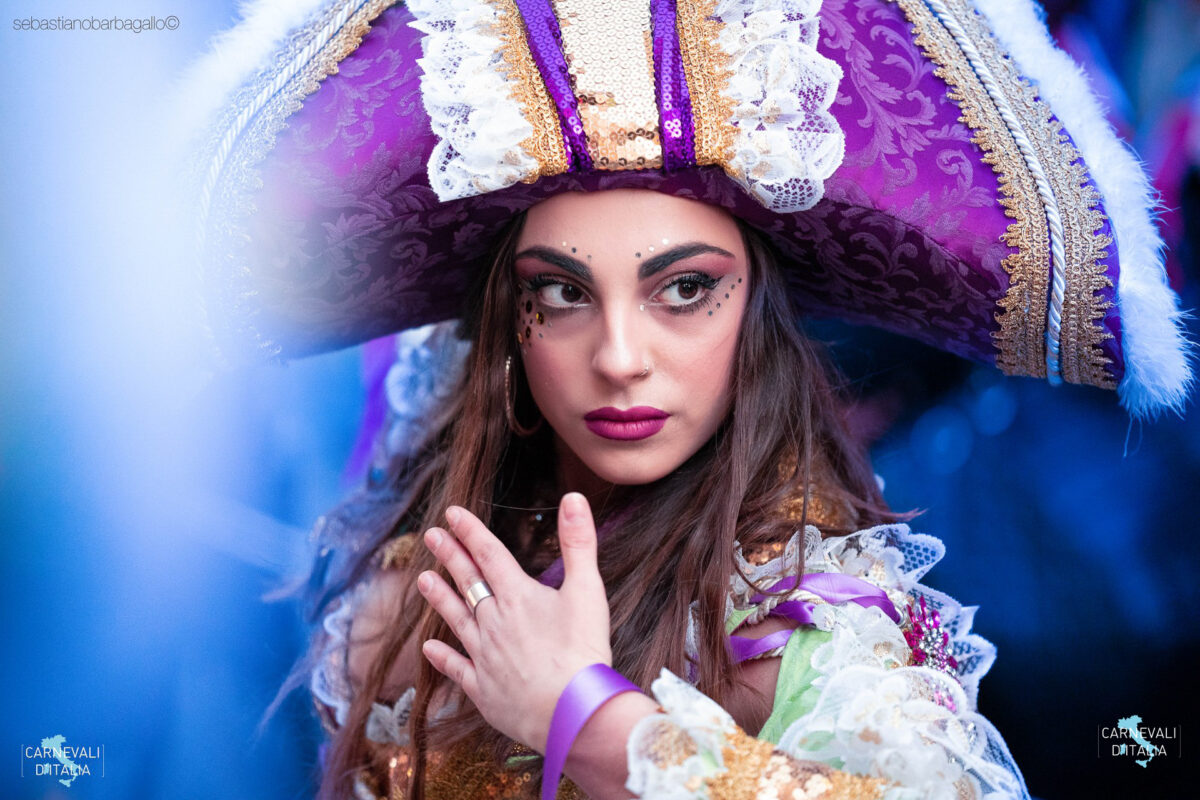
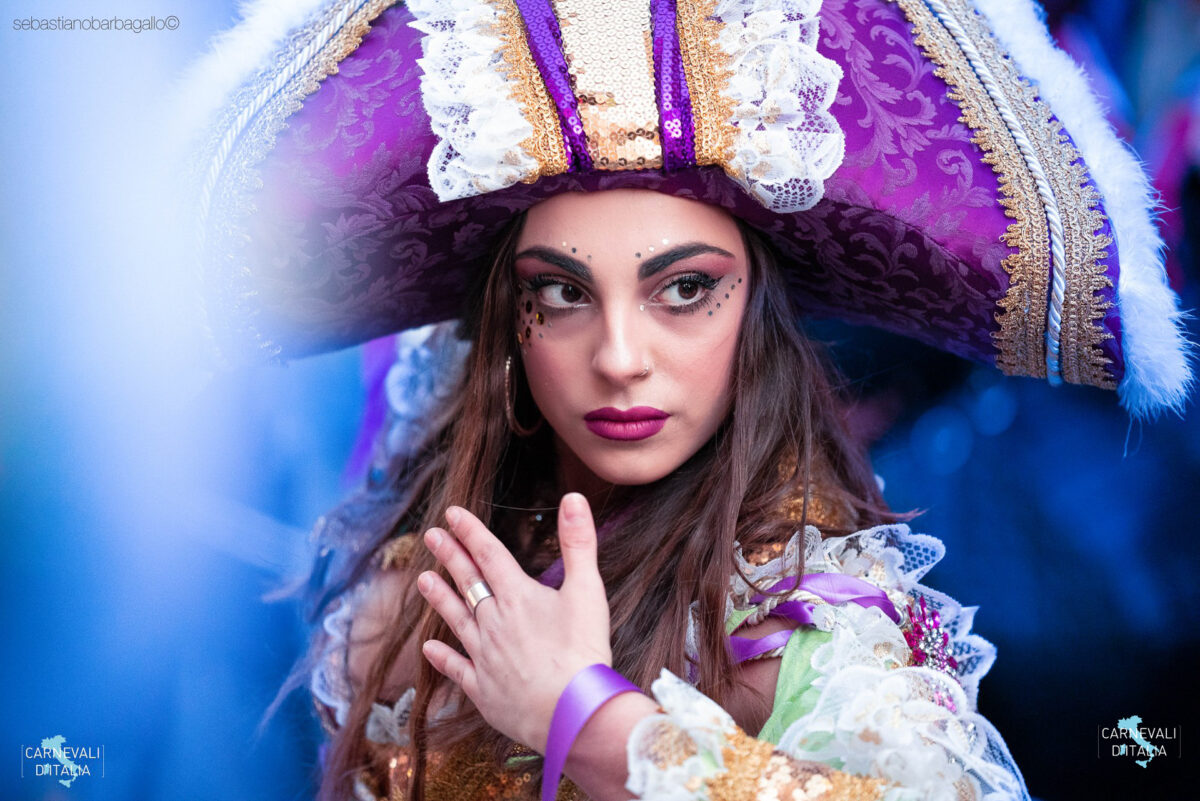
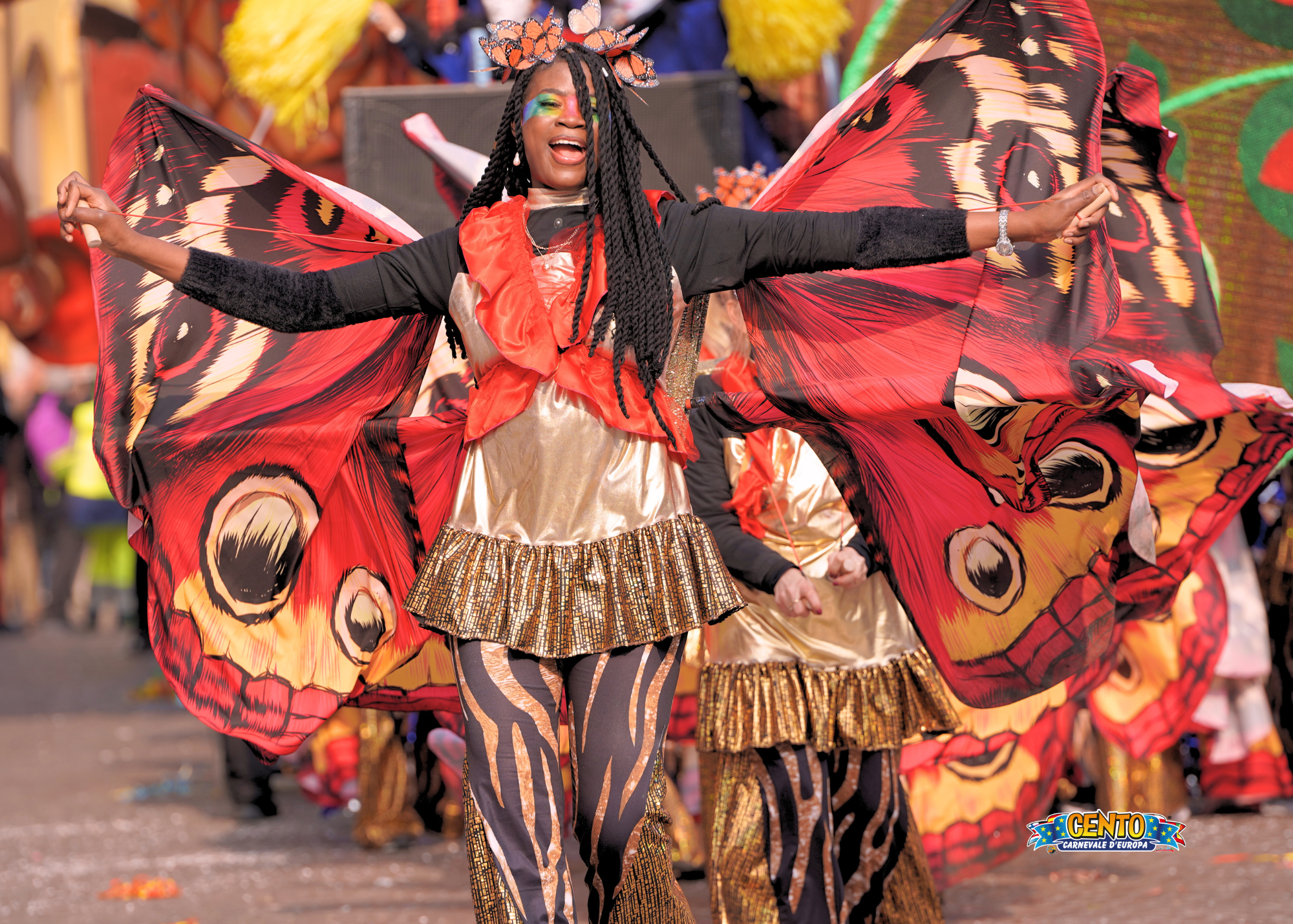
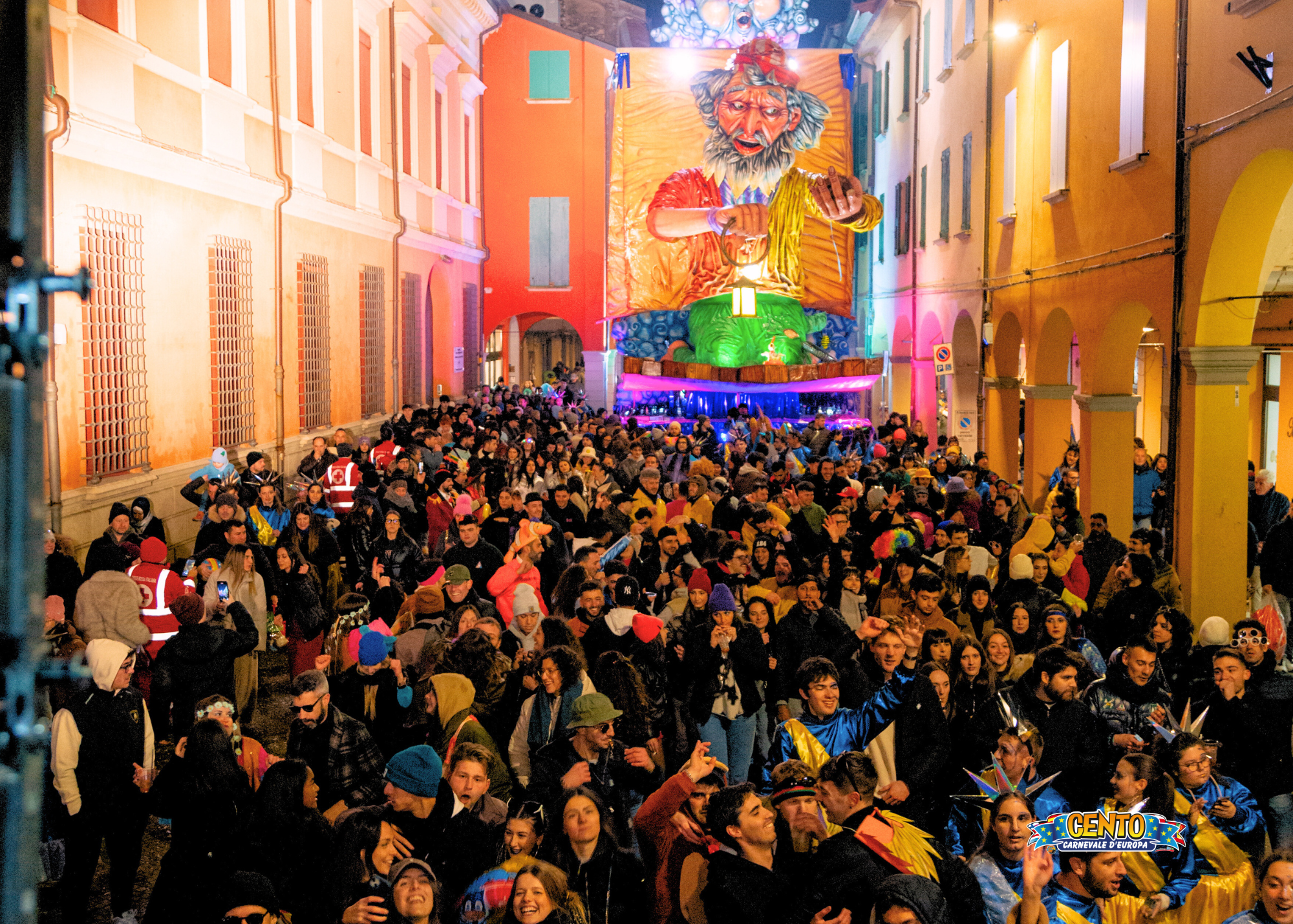
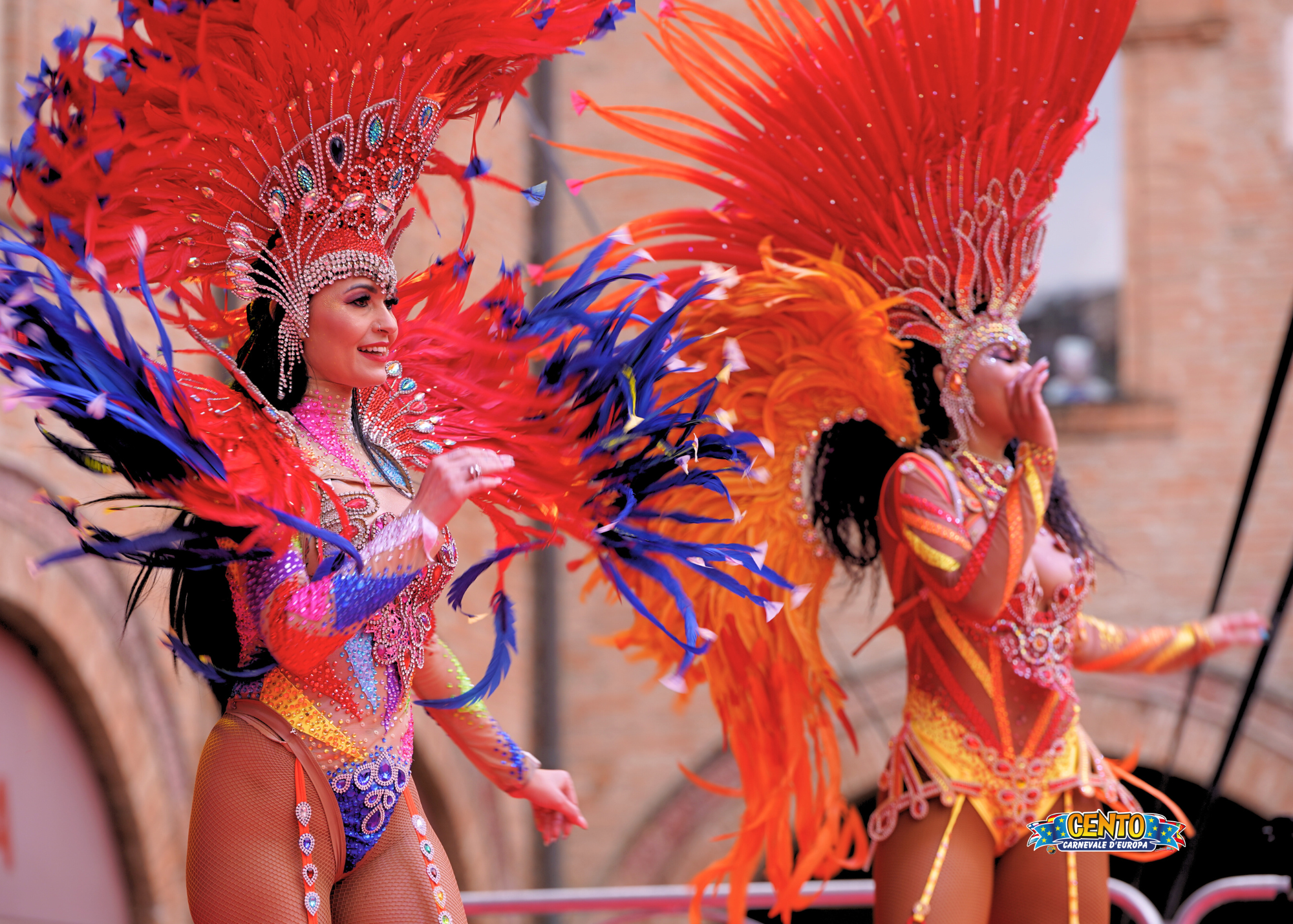
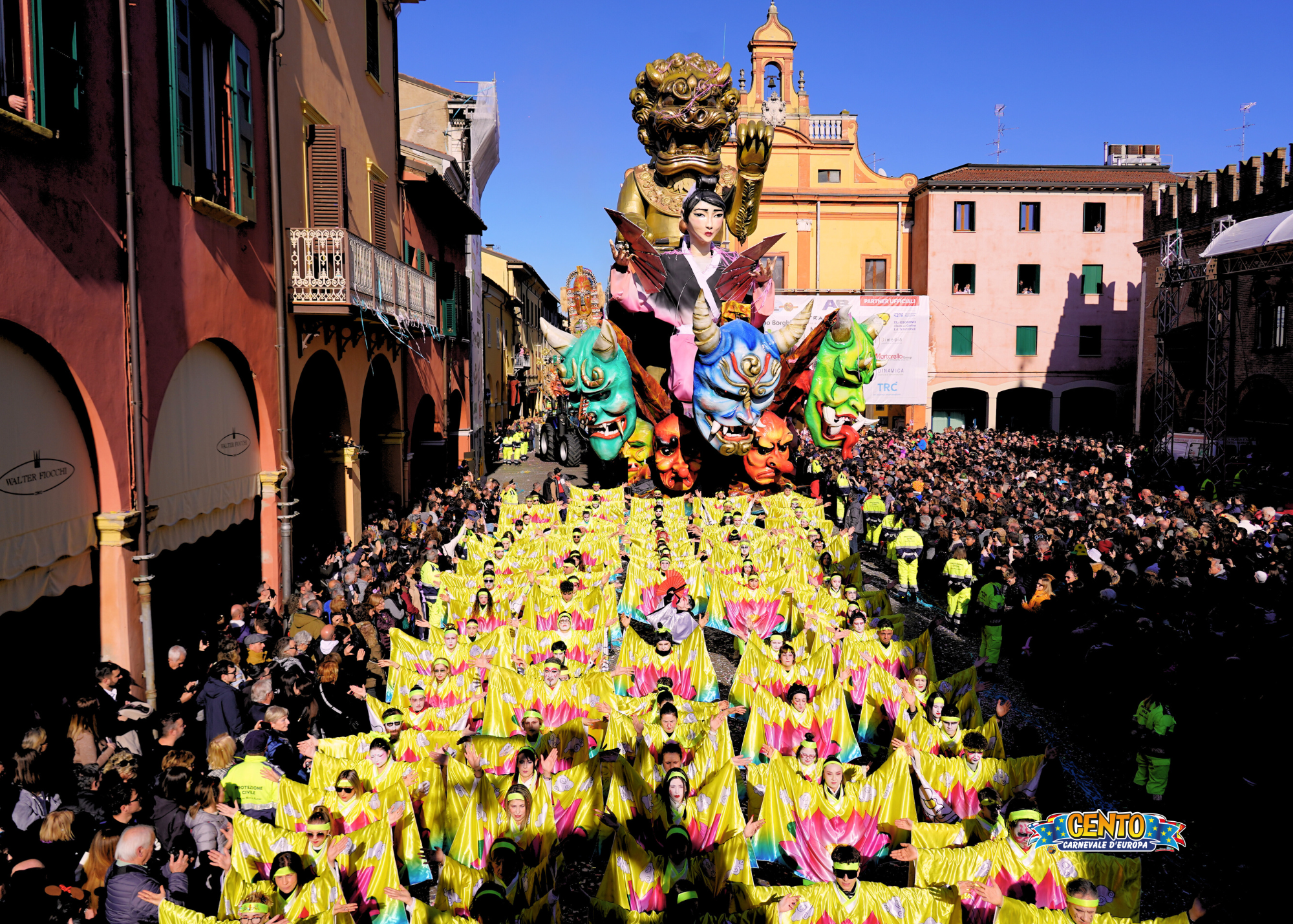
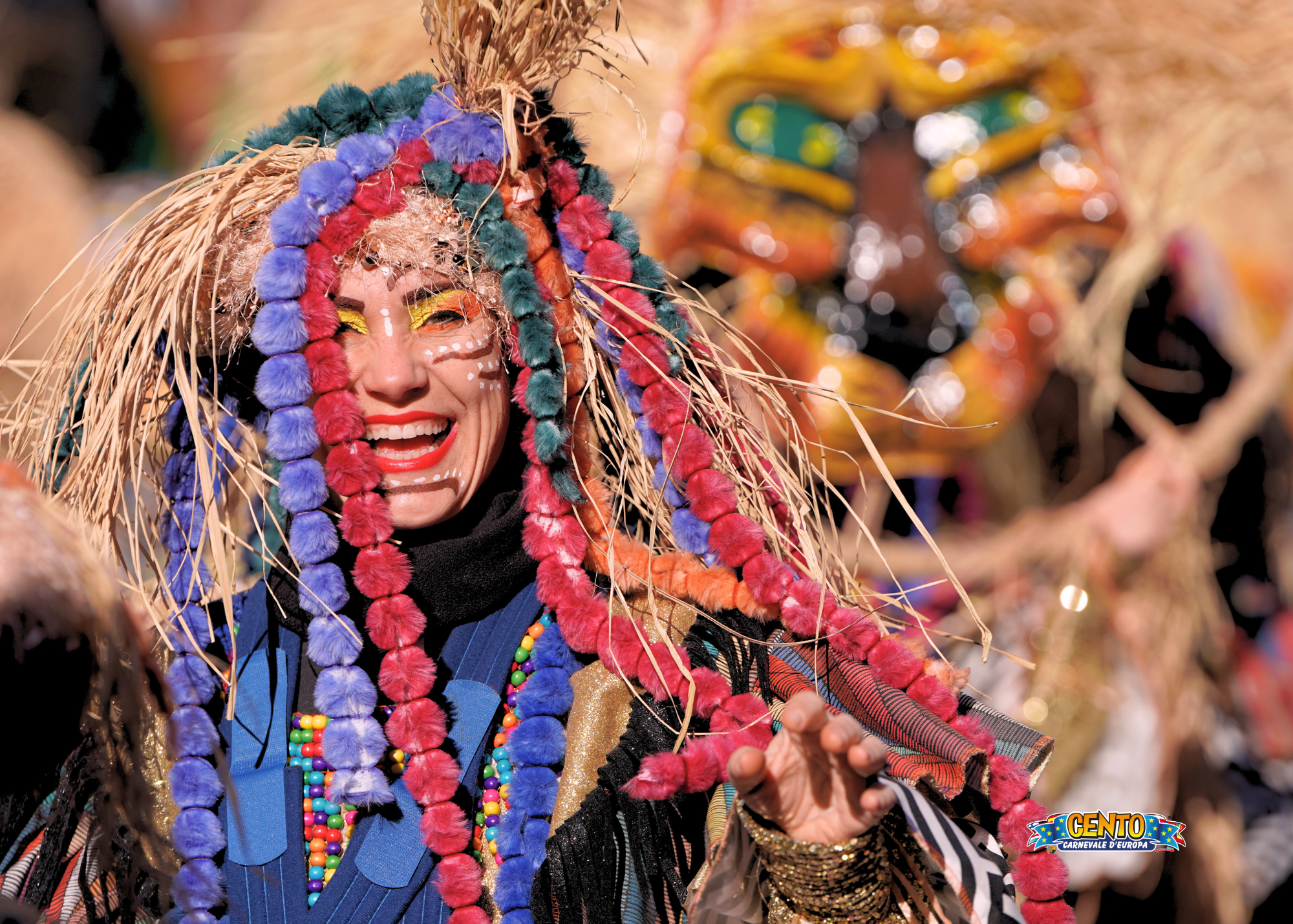
Carnevali d’Italia’s photos from the Carnival of Cento.
Video
History
The first records of the Carnival of Cento date back to the 16th century. In the early 17th century the Cento-born painter Giovanni Francesco Barbieri, known as Guercino, depicted its festivities in the frescoes of Casa Pannini. The modern carnival was born in 1870 with the first procession of floats bearing large papier-mâché figures. In the early 20th century came Tasi, the mask and king of the Carnival, who at the end of the festival reads out his will before being burned.
After the wartime pause the parades resumed in 1947 and became a competition between the carnival societies. In 1993 Cento was twinned with the Rio de Janeiro Carnival, and from 1994 the winning float paraded at the Sambódromo in Rio. Today the Ministry of Culture recognises it as a historic Carnival.
Carnevale di Cento through your eyes
Tag your photos: the best ones end up here and on our channels.
#CarnevaliDItalia #CarnevaleDiCento
Want to promote your event through our channels?
We tell the story of your event, your history and your town to Italy’s largest Carnival community.